
The Analytics Maturity Path from Reporting to Prediction
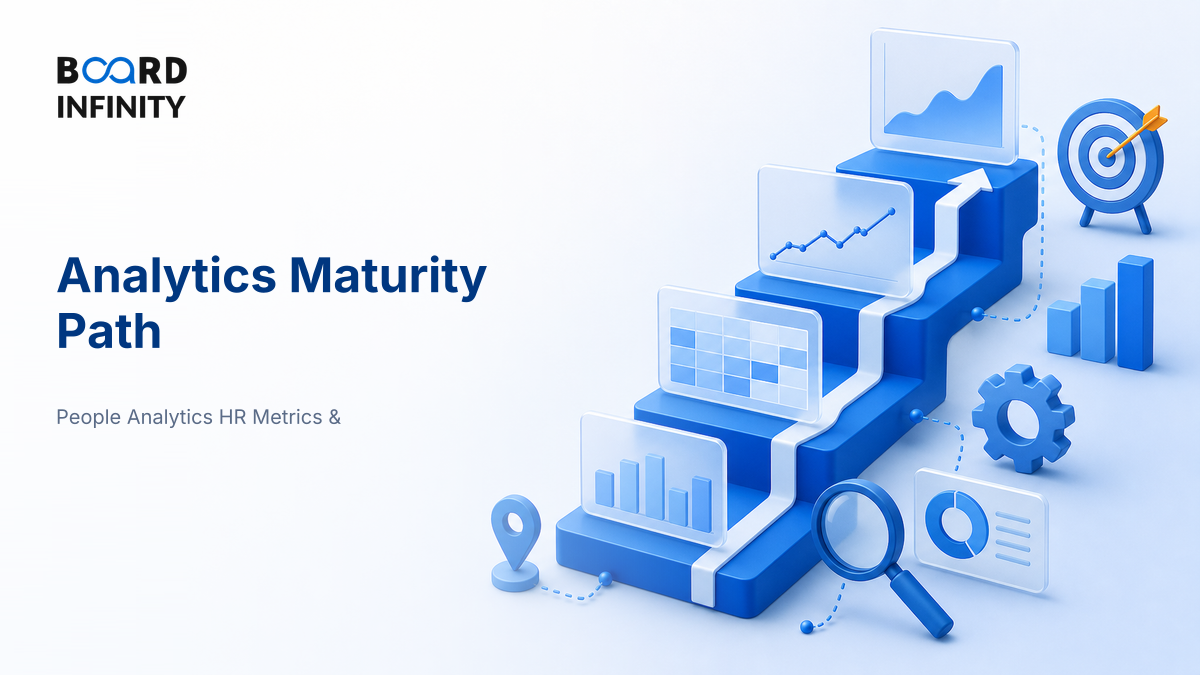
The common myth is that reporting is “basic” and prediction is “advanced.” Walk into a logistics control room during a festival sale and the truth is clearer: a late shipment prediction is useless if the scan data is dirty, the dashboard is ignored, and no one changes the route plan.
- Analytics maturity is the journey from knowing what happened to deciding what to do before it happens.
- The clean path is: reporting - diagnostic analytics - predictive analytics - prescriptive action.
- Reporting is not inferior; it is the foundation. Bad reporting creates bad prediction.
- Predictive analytics estimates a likely future outcome using historical and current data.
- The maturity jump is not only technical. It needs data quality, decision ownership, adoption and feedback loops.
- Measure maturity using data completeness, refresh latency, dashboard adoption, forecast error, precision/recall and action conversion.
- The best interview answer links analytics to a business decision: “Who acts differently because of this insight?”
Big Picture: Analytics Maturity Is a Decision Ladder
Think of analytics maturity as a ladder of managerial questions. Each level answers a sharper question, but each level also depends on the one below it. Prediction without reliable reporting is like forecasting tomorrow’s sales from a cash register that missed half of yesterday’s transactions.
Core Explanation: From Static Dashboards to Forward-Looking Decisions
The analytics maturity path is the progression from describing past performance to anticipating future outcomes and triggering better actions. The key shift is not “more charts.” It is a shift in the decision system.
At the reporting stage, teams standardize facts: revenue by region, attrition by month, delivery delays by hub, open tickets by priority. At the diagnostic stage, they explain movement: attrition rose because a specific tenure band, manager cluster or location worsened. At the predictive stage, they estimate risk or likelihood: which employees may resign, which customers may churn, which orders may miss promise. At the prescriptive stage, they recommend action: which intervention, offer, route or staffing plan should be used.
The most mature teams do not treat analytics as a one-time model. They run it as a loop: define the business question, collect trustworthy data, generate insight or prediction, act on it, then learn from the outcome.
The Real Maturity Test: Can the Business Act on the Insight?
A company is not mature just because it uses machine learning. A company is mature when analytics changes a decision at the right time. A daily sales dashboard that prevents stock-outs can be more valuable than a sophisticated churn model nobody uses.
Use this 2x2 to judge analytics initiatives in interviews. It helps you avoid the trap of praising complexity for its own sake.
Key Metrics to Track Analytics Maturity
If a heading says “maturity,” interviewers expect more than philosophy. Track whether the data is usable, whether users trust the output, and whether predictions improve decisions.
Worked Example: Reading a Simple Attrition Prediction Model
Suppose an HR analytics team flags 100 employees as high attrition risk for the next quarter. Later, 40 employees actually resign, and 30 of them were in the flagged list.
The lesson: model quality is not one number. You judge it against the decision cost - false alarms, missed cases, intervention capacity and business impact.
Definitions You Should Be Able to Say in One Breath
- Reporting: recurring presentation of structured business facts for monitoring performance.
- Descriptive analytics: analysis that summarizes what has happened in the business.
- Diagnostic analytics: analysis that investigates why a business outcome happened.
- Predictive analytics: analysis that estimates likely future outcomes using historical and current data.
- Prescriptive analytics: analysis that recommends actions to improve expected outcomes under constraints.
Case Study: Delhivery Moving from Shipment Visibility to Predictive Operations
Delhivery shows how an Indian logistics company can use analytics maturity to move from tracking parcels to predicting exceptions and improving network decisions.

Situation: Indian logistics is operationally complex: dense urban routes, remote pin codes, cash-on-delivery flows, seller variability, reverse logistics and festival demand spikes. In such a business, simple reporting - “how many parcels moved yesterday?” - is necessary but insufficient.
The move: Delhivery built its operating model around shipment event data, scanning milestones, network visibility and technology-led planning. The analytics maturity path here is visible: first standardize parcel status reporting, then diagnose bottlenecks by facility or route, then predict delivery delays or capacity stress, and finally trigger operational action such as rerouting, staffing changes or exception handling.
Result and lesson: The strategic lesson is not “Delhivery uses algorithms.” The primary driver is dense, timely operational data captured across the shipment journey. Supporting drivers include standardized scan events, automated sortation, control-tower visibility, route planning discipline and operations teams empowered to respond. Prediction works only because reporting and diagnostic layers are already strong.
So what: a mature analytics system does not stop at visibility. It converts visibility into earlier intervention.
How AI Changes the Analytics Maturity Path from Reporting to Prediction
AI does not remove the maturity path; it accelerates movement along it. But it also punishes weak foundations faster.
- Natural-language BI lowers the reporting barrier: Tools can let managers ask, “Which region saw the highest attrition increase last quarter?” instead of waiting for an analyst to build every cut manually. The risk is inconsistent answers if the data dictionary and metric definitions are weak.
- AutoML speeds prediction, but not judgment: AI tools can test multiple models for churn, attrition, demand or credit risk. The manager still decides the target variable, false-positive cost, fairness constraints and action policy.
- AI copilots create decision summaries: LLMs can summarize dashboards, flag anomalies and draft explanations. The danger is hallucinated causality, so human review and source-linked evidence matter.
Use NotebookLM or ChatGPT like an interview simulator: upload a company annual report, analyst presentation or HR dashboard notes, then ask, “Classify each metric as reporting, diagnostic, predictive or prescriptive, and suggest one business decision it should influence.”
Interview Relevance
“How would you help a company move from basic reporting to predictive analytics? Explain with an example.”
Use the phrase: “Analytics maturity is not the move from Excel to AI; it is the move from hindsight to timely action.” It sounds senior because it connects technology to business impact.
Common Mistake
The biggest mistake is saying, “We should implement predictive analytics,” without first explaining the decision, data quality and action owner. It costs candidates because it sounds tool-led, not business-led. One-line fix: always answer in the order decision - data - diagnosis - prediction - action - feedback.