
Gender Inclusion, Returnships & Career Continuity in India
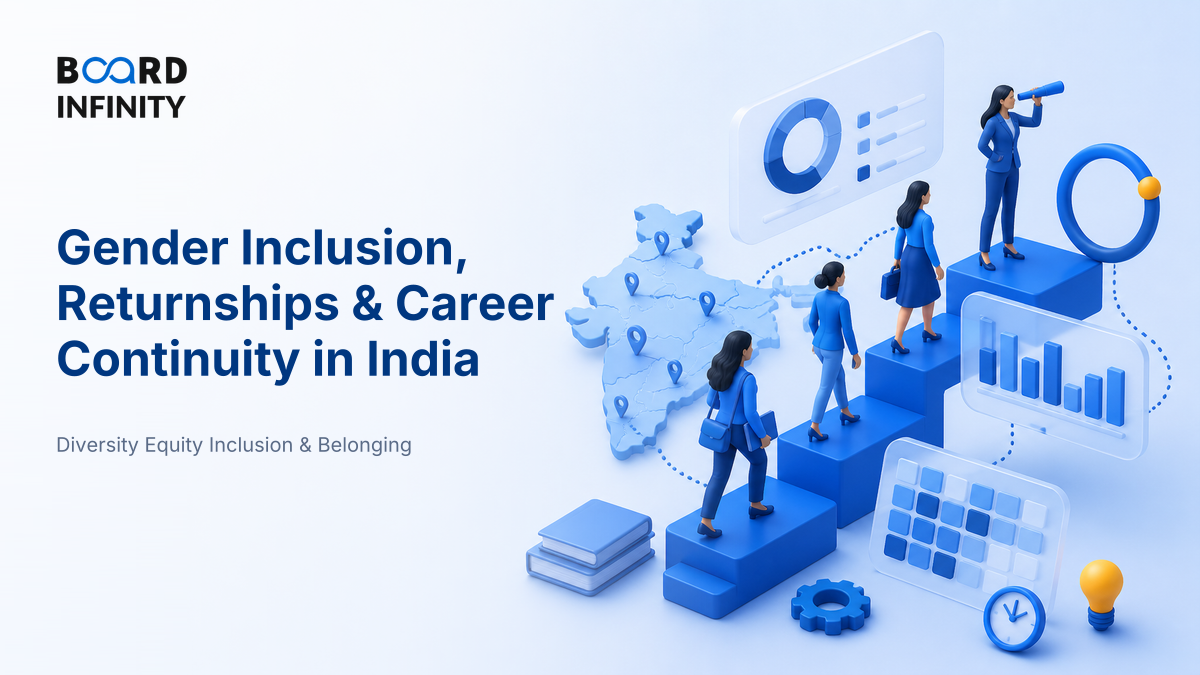
What if the biggest “talent shortage” in India is not a shortage at all, but experienced professionals pushed out by marriage, motherhood, mobility constraints, safety concerns and rigid job design? Gender inclusion is not about adding a women's day poster - it is about whether a career can survive real life.
- Gender inclusion means designing work so people of all genders have fair access, safety, voice and advancement.
- Returnships are structured re-entry programs for professionals, often women, returning after a career break.
- Career continuity is the bigger goal: prevent life events from permanently damaging pay, progression and employability.
- The best companies do not treat this as CSR; they connect it to talent supply, retention, leadership diversity and employer brand.
- India-specific foundations include POSH compliance, maternity benefits, equal pay principles, safe commuting and manager accountability.
- Measure inclusion with representation, hiring parity, promotion parity, retention gap, pay gap and returnship conversion - not intent statements.
- The interview-safe answer: diagnose leakages, design flexible systems, build return bridges, hold managers accountable and track outcomes.
Big Picture
Gender inclusion works only when intent becomes infrastructure. A company may sincerely want more women leaders, but if roles require late-night office presence, managers penalise maternity breaks, and returnees are offered only junior roles, the system will quietly undo the intent.
Core Explanation: From Gender Diversity to Career Continuity
Gender diversity asks, “How many people of different genders are present?” Gender inclusion asks, “Can they participate, progress and be heard on equal terms?” Career continuity goes one step further: “Can life events happen without permanently derailing the career?”
That distinction matters in India because many capable professionals - especially women - face career interruptions linked to caregiving, relocation after marriage, childbirth, elder care, safety concerns, lack of flexible work and social expectations. A returnship is useful, but it is only one bridge in a larger career-continuity system.
The Four Building Blocks of a Career-Continuity System
A strong answer should not stop at “offer work from home” or “hire more women.” The operating system has four linked parts.
Definitions You Can Say in One Breath
- Gender inclusion: Work design that gives people of all genders fair access, safety, voice and advancement.
- Returnship: A structured, time-bound re-entry program for experienced professionals returning after a career break.
- Career continuity: Systems that prevent life events from becoming permanent career penalties.
- SHRM inclusion idea: Fair treatment, equal access to opportunities and resources, and full contribution to organizational success.
India-Specific Ground Rules
In India, gender inclusion has both a business side and a legal-risk side. For interviews, mention the legal basics without turning the answer into a law lecture.
Returnship Design: What Good Looks Like
A returnship is not a favour. It is a talent-market mechanism that brings back experienced people whose CV gap hides real capability. The program must reduce three frictions: confidence gap, skill currency gap and employer bias.
Hindustan Unilever has been associated with Career by Choice, a return-to-work initiative for women professionals after career breaks. The strategic point is not merely “women-friendly branding”; it expands the experienced talent pool while supporting leadership diversity. The primary driver is structured re-entry, supported by brand trust, role matching and managerial acceptance.
Metrics That Make Inclusion Operational
Good DEI answers are measured. Use parity and trend metrics rather than vague claims like “we should create awareness.” Benchmarks vary by industry, level and labour pool, so the strongest target is improvement against the company's own baseline plus parity with the relevant talent market.
Mini Case Study: Axis Bank and “HouseWorkIsWork”
Axis Bank reframed women's unpaid household work as evidence of transferable capability, encouraging women on career breaks to restart formal employment.

Situation: Many Indian women leave formal employment because of caregiving, marriage, relocation or childbirth. When they try to return, the CV gap is often read as a capability gap, even when the person has prior work experience and strong transferable skills.
The move: Axis Bank's HouseWorkIsWork campaign challenged that bias by treating household management as work that builds planning, budgeting, multitasking, negotiation and responsibility. The campaign was not just a sentimental message; it supported a hiring conversation around women restarting careers after a break.
Outcome / lesson: The primary driver was the reframing of a career break from “absence” to “experience.” Supporting drivers were employer-brand visibility, a concrete restart narrative, managerial openness and the ability to connect interested women to real roles. The lesson for interviews: returnships work when they change both supply-side confidence and demand-side employer bias.
How AI Changes Gender Inclusion, Returnships & Career Continuity
AI can either reduce exclusion or scale it faster. The difference lies in governance.
- AI screening and bias audits: Resume-screening tools can help process large applicant pools, including returnees, but they must be tested for adverse patterns against gender, career breaks, age proxies and education pedigree.
- Skills intelligence for returnees: AI can map prior experience to current role requirements and recommend bridge learning - for example, what a returning finance manager needs to refresh before joining a treasury or FP&A role.
- Flexible work optimisation: Workforce-planning tools can help design rosters, hybrid schedules and safe commute planning, especially in operations, banking, retail and customer-service environments.
Use NotebookLM: upload a company's annual report, careers page and DEI or sustainability disclosures, then ask, “Where are the gender inclusion claims, what metrics are missing, and what interview questions could test this?”
Interview Relevance
“Suppose you are the HR business partner for a large Indian bank that wants to improve gender diversity in mid-management. Attrition after maternity and low return after career breaks are major issues. What would you recommend?”
Use the phrase “career continuity architecture”. It signals that you understand the system - policies, managers, roles and metrics - not just one isolated HR initiative.
The biggest mistake is treating returnships as a goodwill program for women rather than a business-critical talent system. It costs candidates because the answer sounds soft, unmeasured and disconnected from operations. Fix: link every inclusion initiative to talent supply, retention, productivity, risk reduction and measurable parity outcomes.