

Coding and data-structures depth, aptitude drilled on pattern, communication and interview practice, mapped to the recruiters your campus actually sees, for CS and core branches alike.
Engineering and university campuses across the NIRF-100 and the private network













Why engineering campuses choose us
Aptitude books are generic. Recruiter screens are not. The difference is the whole point.
Data structures, algorithms and problem articulation built systematically, rather than assumed from the syllabus.
Preparation is mapped to the screens your campus actually faces, section by section, rather than to a general aptitude book.
Mechanical, civil, chemical, petroleum, energy, materials and bio get role-mapped tracks, not a computer-science program in disguise.
A foundation track for the whole batch and an advanced track for the top cohort, running at the same time rather than one instead of the other.
How delivery works
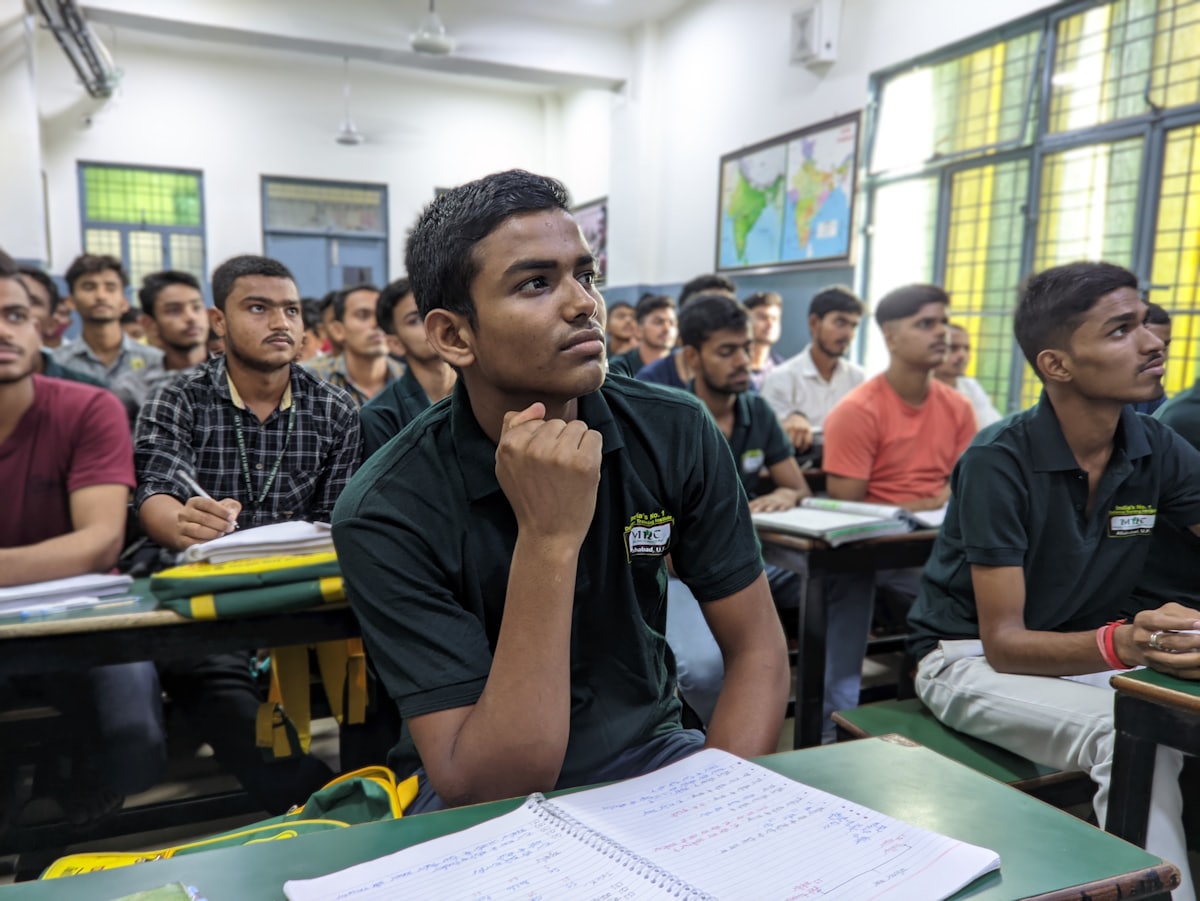
On campus
The foundation track runs for everyone, asynchronously plus live where it counts. The advanced track runs in parallel for the top cohort. Both are measured on the same benchmark, so movement is comparable across the batch.
Everything available to you
Grouped by what they do. Every one is a real page with published curriculum and hour plans.
Start by knowing where the cohort actually stands.
The delivery layer, scheduled inside your academic calendar.
Company-pattern tests, GD, interviews and mock panels.
Explore Core Engineering BranchesRole-mapped tracks for mechanical, civil, chemical, energy and bio.
Explore Super 60 / 120 / 300 CohortsTopper batches trained deeper and faster, in parallel.
Explore Gen AI & Future SkillsApplied AI fluency: prompt craft and AI-assisted analysis.
Explore Functional Skill BootcampsDomain depth for finance, marketing, analytics, operations, HR and tech.
ExploreEverything between a trained student and a confident interview.
Work that lives inside the program rather than beside it.
The platform
Included in the engagement, white-labelled to your campus, and licensed to nobody else.

The whole degree, not a list of courses
Run a foundation track and an advanced track to the same batch without splitting the timetable.
All courses › B.Tech CSE, Term 4 › Data Structures and Algorithms

Every format of assessment, on one platform
Section-wise proctored testing with coding environments, mapped to the screens your recruiters set.
Test management › Data Structures, mid term
| Student | Programme | Score | Integrity | Result |
|---|---|---|---|---|
| Arjun Mehta | B.Tech, Jan 2024 | 88/100 | 98% | Passed |
| Ravi Kumar | B.Tech, Jan 2024 | 86/100 | 94% | Passed |
| Vikram Singh | B.Tech, Jan 2024 | 85/100 | 61% | Flagged |
| Neha Rao | B.Tech, Jan 2024 | 41/100 | 99% | Failed |

An AI interview for every student, not the top ten
Unlimited scored mock interviews, so panel practice becomes a routine rather than a one-off.
New interview › Data Analyst, technical round

Communication practice, in every year
Faculty pick the situation - an extempore, a viva, defending a project, a client call - and the student talks to an AI that pushes back.
Roleplay › Defending your capstone project

A resume every student finishes
Every CV scored against real job descriptions, with the rewrite suggested line by line.
Resume co-pilot › B.Tech CSE, 2026 › Checked against: Data Analyst

One placement season, in one record
Handle a two-thousand-student drive without a spreadsheet: eligibility, slots, shortlists and offers.
Placement cycle 2026 › 1,240 students across 9 programmes
| Company | Stage | Role | Eligible | In round |
|---|---|---|---|---|
| Kaveri Systems | Resume shortlisting | Associate Product Analyst | 214 | 96 |
| Sundara Analytics | Final interview | Data Analyst | 186 | 16 |
| Trelis Infra | Offers rolled | Graduate Engineer | 302 | 31 |
The engagement model
A proctored baseline across aptitude, domain and communication, scored against a national benchmark rather than a percentage.
A baseline reportThe gap becomes an hour plan: which tracks, which semesters, which cohorts, agreed with your team before anything is scheduled.
An agreed hour planIndustry practitioners on campus, with the platform, content and assessments running underneath them.
Sessions and a live viewCohort-level progress every week, in a format your academic council can read without translation.
A cohort reportWhat you receive
A record of what was delivered, what it measured, and what a student walks away with.
Published module lists, session counts and the delivery schedule, agreed before anything starts.
Cohort and student-level results from proctored assessments, comparable across campuses and years.
Attendance, completion and readiness your placement office can open on any day of the term.
NSQF and CII-aligned certification where the pathway applies, plus Coursera certificates.
Questions
That is the core use case. Volume-screen preparation runs for the whole batch, while advanced product-company depth runs for your top cohort in parallel.
Yes. Tiered delivery, asynchronous load balancing and parallel cohort tracks are exactly what the model is built for.
Core Engineering Branches is a separate track covering mechanical, civil, chemical, petroleum, energy, materials and bio, with role modules mapped per branch.
A proctored benchmark at the start, comparable assessments through the program, and cohort-level reporting your department can read week to week.
Yes. Tracks are mapped to the roles a branch actually recruits into, which applies to diploma and polytechnic streams as much as to degree programs.
Yes. Courseware ships as SCORM or xAPI and runs on your LMS, or you can use InfyLearn white-labelled to your campus.
Pricing depends on the services selected, the batch size and the delivery mix, so it is quoted per engagement. Tell us the scope and we will put a number against it.
Talk to us
Share the batch size, the branches and the recruiters you see most, and we will map a plan to them.
 Approved skilling partner
 Industry partner
 Industry partner, academic credits
 Official instructor partner